
Does a Unique Experience Actually Work in Travel Apps?
Intro
What does travel mean in our lives? For each person, it might represent something different, but it’s likely about seeking new experiences and rest. To enhance that experience, there are preparations to make, and there are already quite a few apps that cater to travelers.
If I were to design a travel-related app, what would be my approach? I imagine it would be quite challenging.
With so many apps available, users may struggle to decide which one to choose. So, what differentiation should I offer?
Many apps already combine functions like booking accommodations, flights, car rentals, activities, and community features in one place.
Should the focus be on convenience, price competitiveness, or providing extensive information on destinations?
What’s the most important business model to keep in mind while achieving this differentiation?
All that came to my mind was advertising or commission fees… 🥹
What features could I use to create a ‘lock-in’ effect?
Every user has a purpose for using a travel app. What triggers should I implement to encourage users to stay longer on this app?
With these questions in mind, I explored a few travel apps from different categories.
The apps I reviewed included Tripadvisor, Tripbtoz, Trip.com, Booking.com, Skyscanner, and Expedia!
I documented which apps offered unique experiences and what those experiences felt like.
Essential Features & Experiences (According to Me) for Travel Apps
Accommodation and Flight Booking (Trip.com 👍🏻)
Trip.com excelled here, offering the most functionality among the apps I explored! It seemed to have a clear edge in both convenience and price competitiveness.
It also offered numerous search options for users.
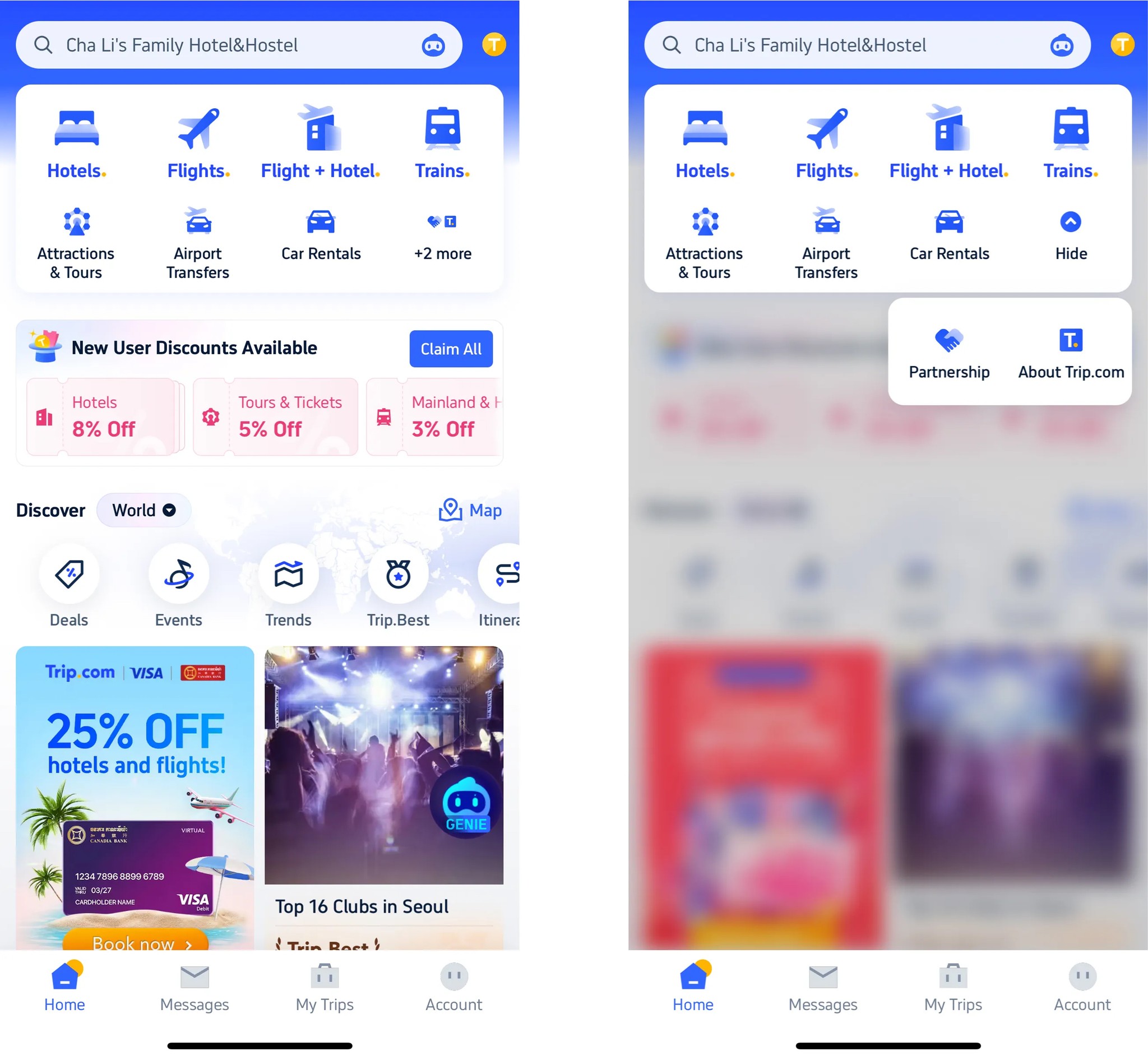
Main screen of Trip.com
Searching and Sharing Destination Information
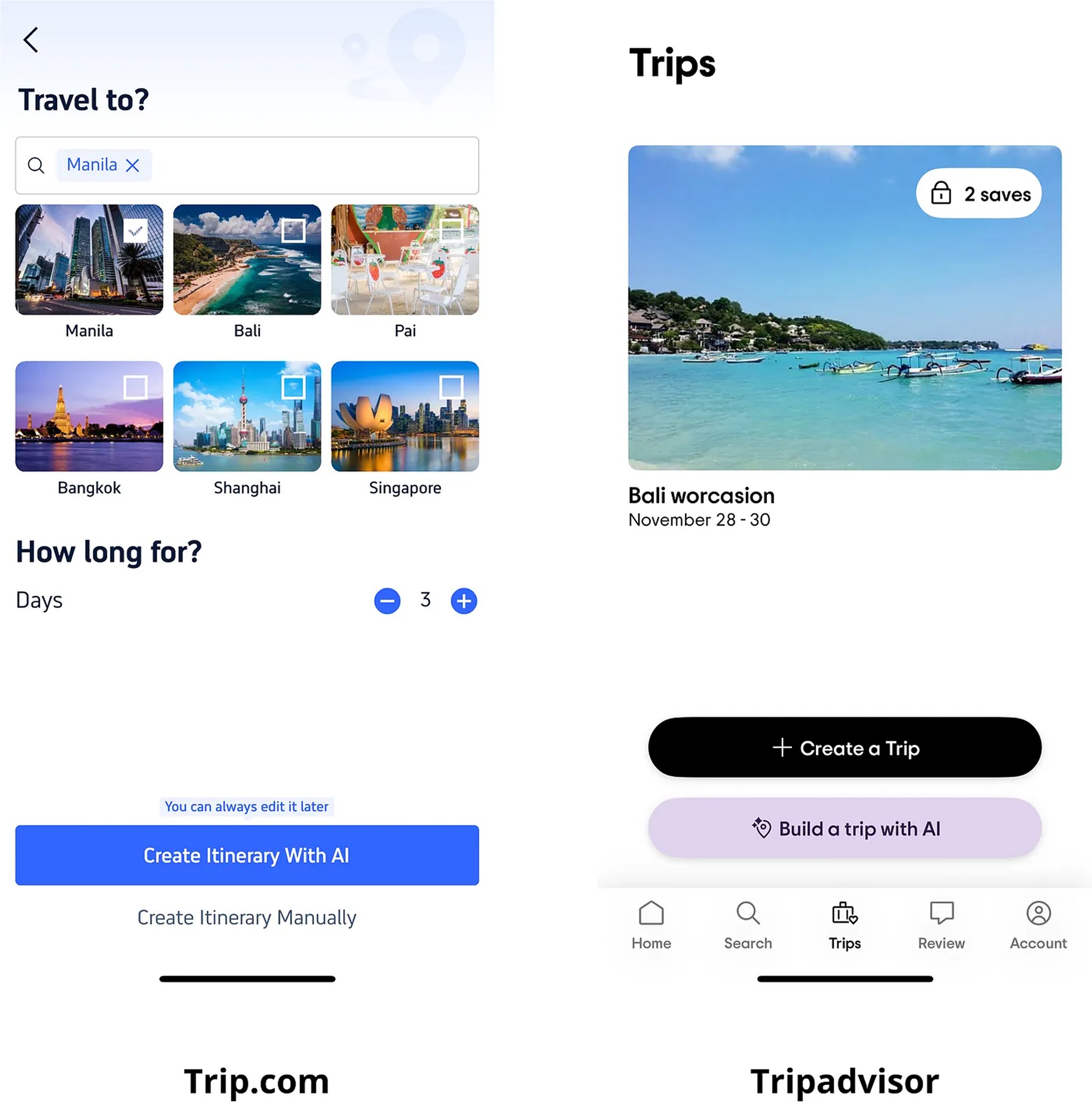
Certain elements caught my eye. Information about destinations is crucial for planning. In this regard, AI functionality now feels essential. Both Trip.com and Tripadvisor offered features for generating travel plans.
So, Which App Provided the Most Unique Experiences?
👍🏻 Tripbtoz’s Interactive Approach to App Engagement
I used to think it was natural for apps to provide one-way information to users, as users would typically open a travel app for this purpose. However, I began to see user-service interaction as a new opportunity.
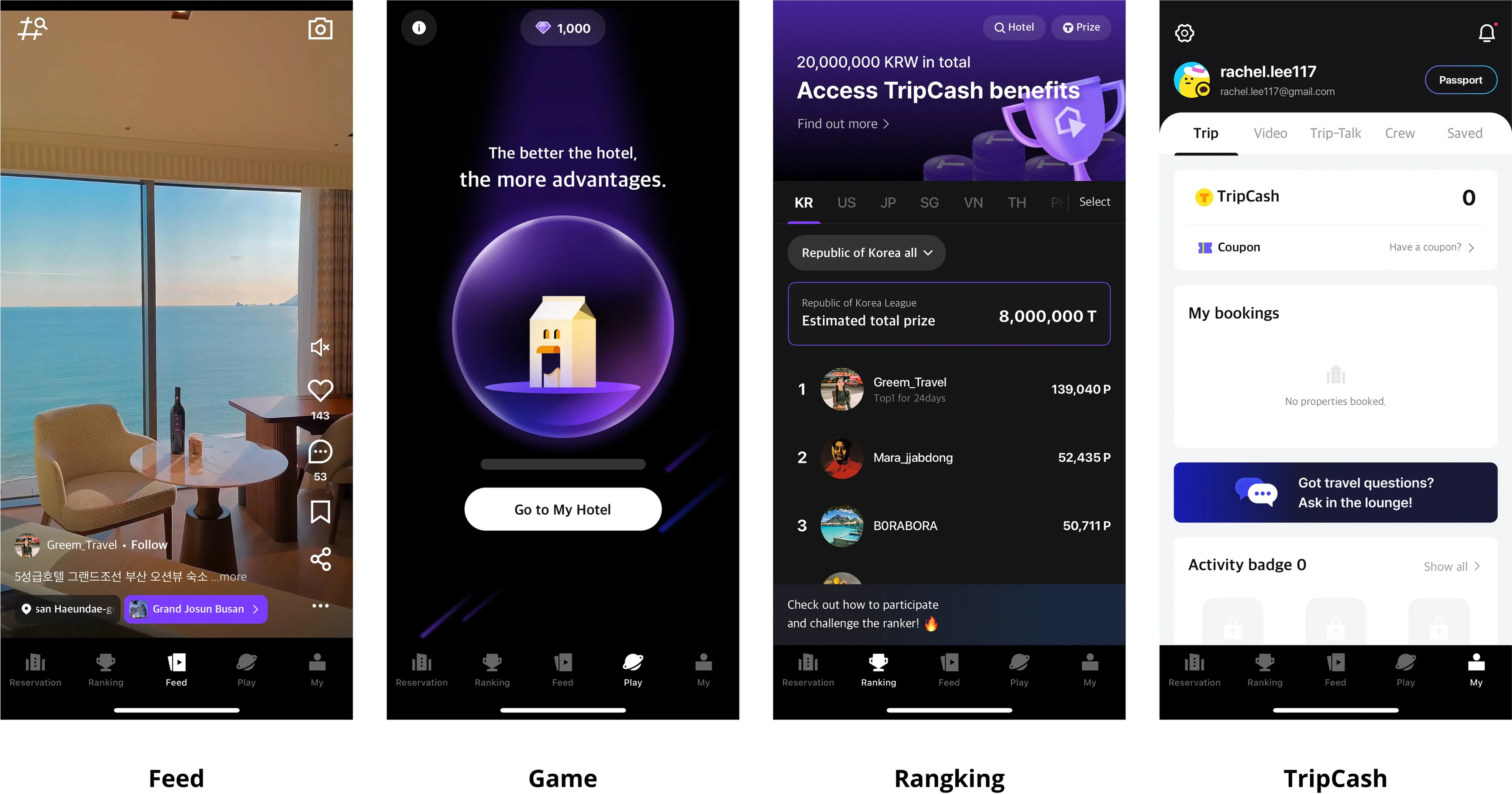
✈️ Key experience in Tripbtoz
Share travel experiences / Play games → Earn Trip Cash → Plan your next trip using Trip Cash
The usual flow in a travel app is Provide information → Browse (book, view reviews) → Etc. (sharing, etc.). But in Tripbtoz, this order felt reversed.
The first screen you see is a Feed, highlighting its social-first approach.
Their goal appears to be attracting frequent travelers by incentivizing engagement through Trip Cash, creating a structure that shares benefits with users.
Gamification features
Through a virtual hotel game, users can earn “gems,” which can be converted into Trip Cash. Trip Cash can be used for travel expenses or to buy game items.
A social media-like vibe
The Feed felt similar to Instagram Reels or TikTok.
I once thought Airbnb would benefit from a feature like this — something that showcases authentic experiences instead of just ratings. It’s clear that one-way information services are becoming less appealing to users.
👍🏻 Tripadvisor’s Comfortable, Consistent Experience
Tripadvisor has a name worth remembering! The app’s mascot, a cute owl, warmly guides users through the travel planning process.
The standout feature was its advisor-like UX writing.
It prioritized verbs over keywords, making actions feel more intuitive from the user’s perspective.
e.g., “Stay” instead of “Hotel,” “Do” instead of “Activity.”
More focus on experiences than plans.
Instead of pressuring users to “Book Now!” the main screen prominently featured restaurant recommendations. This gave it an SNS-like feel, but in a different way from Tripbtoz.
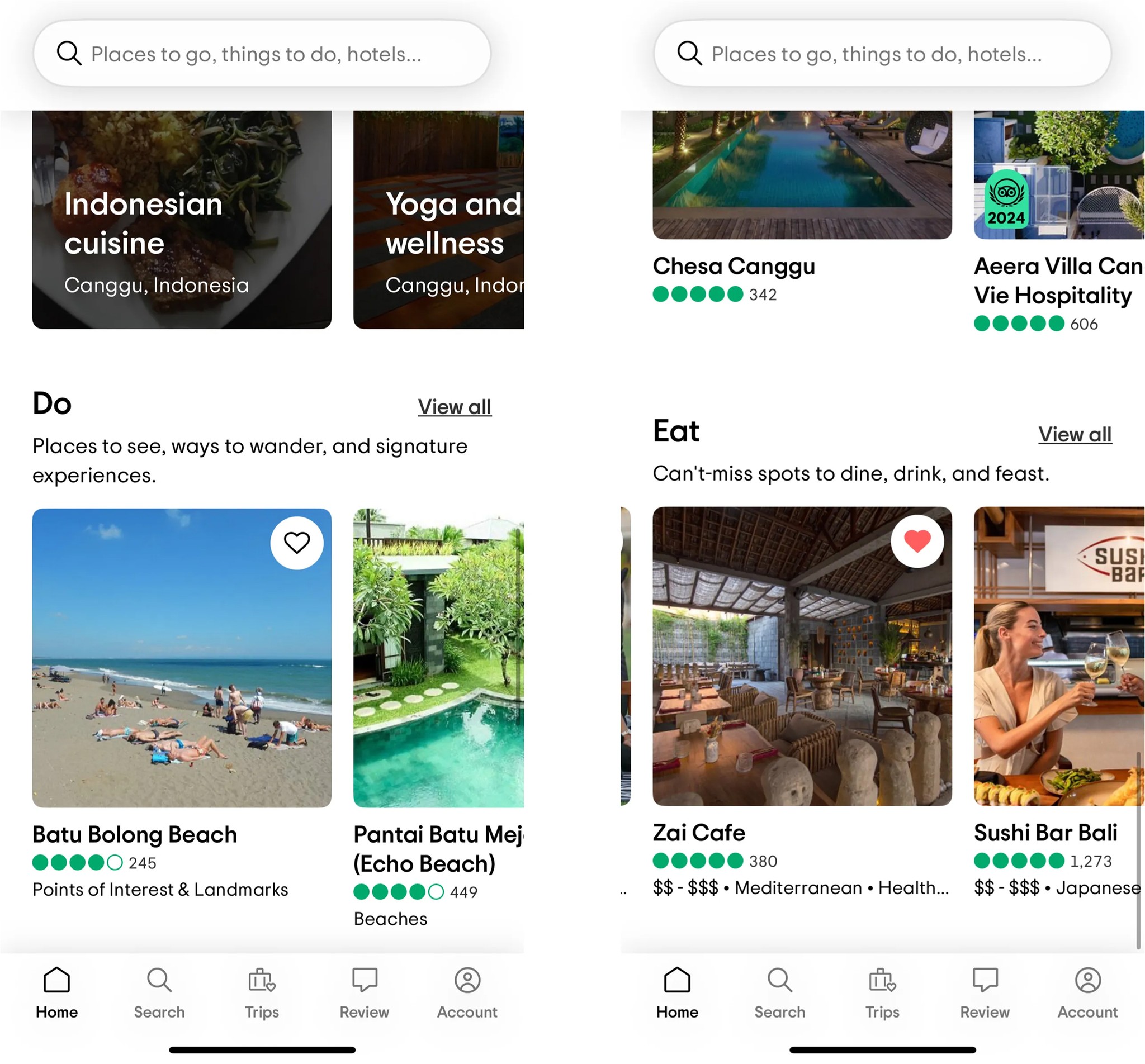
Main screen of Tripadvisor
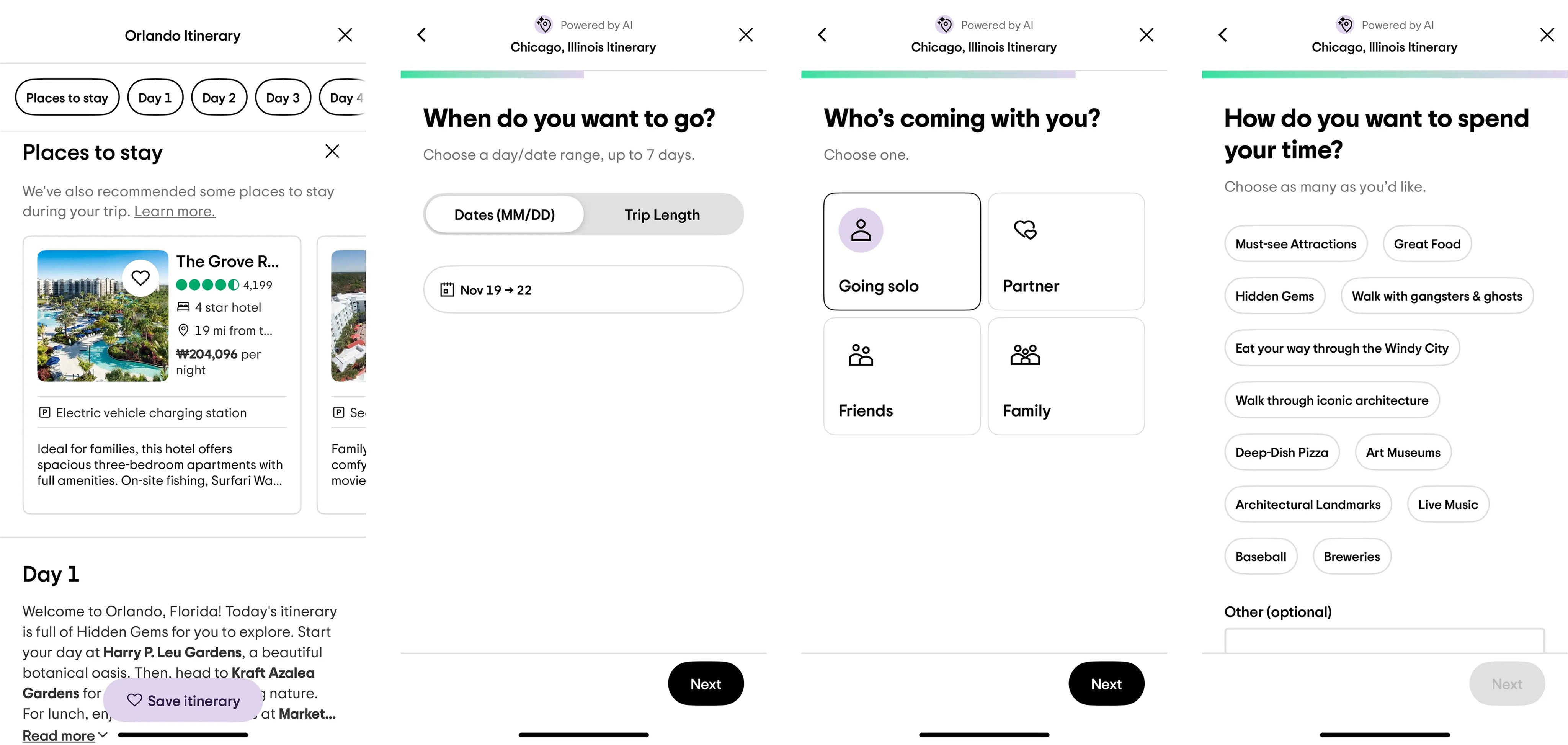
Helps build a custom travel theme and uses AI for planning.
Enter a few details like dates, location, travel length, theme, and companions to receive recommended accommodations and activities.
Trip.com had a similar feature, but Tripadvisor’s suggestions felt more like friendly recommendations. “How about this?” rather than “Here’s the info you need.”
(The Invite feature lets users plan trips collaboratively, a feature I also noticed on Expedia. 😆)
Encourages “authentic experiences” rather than standard reviews.
It offers gentle nudges to write reviews, explaining why they’re helpful in the app’s unique tone. While some might find this a bit verbose, I felt it was quite friendly.
Users can view others’ unique travel experiences, not just ratings, creating the feeling of receiving thoughtful advice. It also allows users to build a personal travel history on Tripadvisor.
Remaining Questions After Exploration
Can offering unique experiences be profitable? Are travel apps’ BMs limited to revenue from information exposure?
Skyscanner, for example, is similar to HotelsCombined in that it’s focused on reducing information asymmetry.
Does providing unique experiences simply draw users in, only for services to profit from commissions or user data? (Tripbtoz provides some answers to this, but I still have questions.)
Users book accommodations and flights in advance, so these companies have substantial cash flow from prepayments. This makes me wonder if they’re closer to finance apps in some ways.
What data should we analyze?
While it’s crucial to assess features that lock in users, a deeper look into user behavior could reveal more travel personas.
I wondered if Tripadvisor’s lack of rewards for writing reviews might boost their credibility over reward-based reviews. Could this approach fulfill users’ need for “record-keeping”?